Etihad Rail: Everything You Need to Know About the UAE’s New Passenger Train

Etihad Rail’s first passenger trains started running on June 30, 2026, on the Abu Dhabi to Fujairah route. Once it’s fully open, it will connect 11 cities and towns across the UAE. I’ve gone through everything there is to know so far, and I’m sharing it all here in one place.
If you’ve been following the news, you probably know Etihad Rail has been running freight trains for a while now. But passenger trains are a completely different story, and it’s exciting that this is finally happening.
When does Etihad Rail open for passengers?
The first route, Abu Dhabi to Fujairah, opened on June 30, 2026. After that, it’s a phased rollout. The Dubai and Al Dhaid stations join from September 30, 2026. Al Dhafra stations follow on December 30, 2026. Sharjah is last, starting March 30, 2027.
Once everything is up and running, Etihad Rail expects to carry around 10 million passengers a year.
Which cities will Etihad Rail connect?
The full network covers Abu Dhabi, Dubai, Sharjah, Fujairah, Al Sila, Al Dhaid, Ruwais and Al Mirfa, plus a few smaller stops in between. The 11 confirmed stations are:
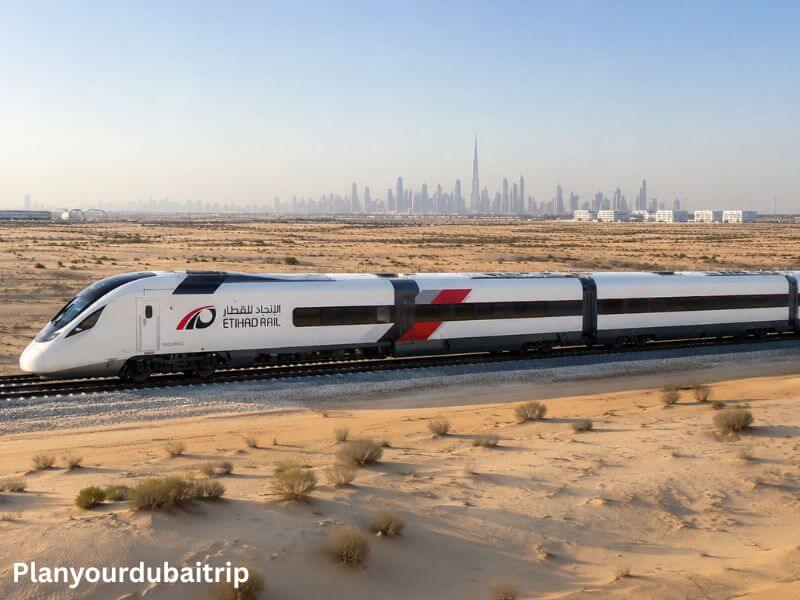
Photo Credit: AI Image
- Al Dhaid, Sharjah
- Al Dhannah, Abu Dhabi
- Al Faya, Abu Dhabi
- Al Hilal, Fujairah
- Al Sila, Abu Dhabi
- Al Mirfa, Abu Dhabi
- Jumeirah Golf Estates, Dubai
- Madinat Zayed, Abu Dhabi
- Mezairaa, Abu Dhabi
- Mohammed bin Zayed City, Abu Dhabi
- University City, Sharjah
How long does the journey take?
This is the very exciting part. Travelling between Abu Dhabi and Dubai on the normal passenger train takes just 57 minutes.
There’s also a high-speed train planned for that same route, which should cut the trip to 30 minutes, a real game-changer for anyone commuting between the two cities.
Compare that to the bus, which takes around 2 hours, and you can see why people are excited about this one.
Here’s the full breakdown of journey times:
- Abu Dhabi to Dubai (high-speed): 30 minutes
- Abu Dhabi to Dubai (normal train): 57 minutes
- Abu Dhabi to Ruwais: 1 hour 10 minutes
- Abu Dhabi to Fujairah: 1 hour 45 minutes
- Abu Dhabi to Sohar (Oman): 1 hour 40 minutes
- Al Ain to Sohar (Oman): 47 minutes
That last one is part of a separate cross-border project called Hafeet Rail, which will link Abu Dhabi to Sohar in Oman. Construction on that started back in May 2024.
How much do tickets cost?
There is only confirmed pricing for the first route so far. Abu Dhabi to Fujairah starts from Dhs55 in comfort class and Dhs120 in premium class. Dubai’s RTA is handling ticketing and payments for the whole network, so the nol card will likely work for Etihad Rail too.
There are actually two seating classes and three fare types, which I think is a nice touch for different kinds of travelers.
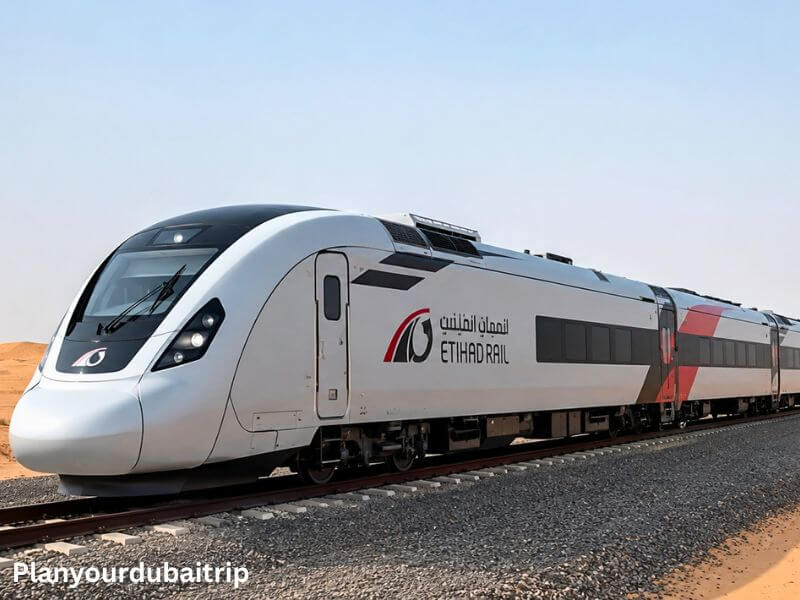
Photo Credit: AI Image
The two classes are Rail (the standard class) and Premium Class, which gets you bigger seats, more personal space, and complimentary refreshments. Both classes are described as spacious, modern, and spotlessly clean.
Within those, you can pick from three fare options:
- Saver – the cheapest fare. Your seat gets assigned automatically, and you can’t change or refund the booking. Good if your plans are already fixed.
- Value – mid-range price. You can choose your own seat and make changes, but it’s still non-refundable.
- Flex – the most expensive, but fully flexible. You choose your seat, can change your booking, and it’s refundable.
TIP: if you’re travelling as a family or group and want everyone sitting together, go for Value or Flex so you can pick your own seats.
What’s it like onboard?
Every passenger gets an assigned seat, so there’s no scrambling around at the platform. Trains will have a capacity of around 400 people, split across economy, family and first class carriages.
A business class carriage will have 16 seats, while economy carriages will hold 56.
Two things stood out to me here: free wifi for everyone, no matter your seat or fare type, and a power socket at every single seat.
That makes it properly doable to work on your laptop while travelling, or just keep your phone charged the whole way, which I always appreciate.
There’s also an infotainment system, food and drinks available onboard, plenty of legroom and proper air-conditioning.
Italian hospitality company Arsenale is behind the interior design, and the trains are being built by Spain’s CAF, so the standard should be properly European.
How do you book a ticket?
You can book through the Etihad Rail app or on their official website, and bookings open up to four weeks before your travel date.
Etihad Rail: FAQs
When does Etihad Rail open for passengers?
The first route, Abu Dhabi to Fujairah, opens on June 30, 2026. The rest of the network rolls out in phases through to March 2027.
How much does an Etihad Rail ticket cost?
So far, only the Abu Dhabi to Fujairah route has confirmed prices, starting from Dhs55 in Rail class and Dhs120 in Premium Class.
Will there be free wifi on the train?
Yes, every passenger gets free Wi-Fi on board, no matter which class or fare you book.
Can I choose my own seat on Etihad Rail?
With Value or Flex fares, yes. Saver fares get you an automatically assigned seat instead.
How many cities will Etihad Rail connect?
Once the full network is open, it will connect 11 cities and towns across the UAE.
If you’re planning your Dubai trip, these articles might help: