How to Use Public Transport in Dubai: A Complete Guide

Planning your first trip to Dubai and not sure how to get around? When you first arrive in Dubai, figuring out how to get from one place to another can feel a little confusing.
The city is big and spread out, but the good news is that you don’t need to rent a car to explore it. Public transport in Dubai is clean, modern, and an affordable way to get around.
After visiting and staying in Dubai several times, I’ve put together this guide to help you find your way around the city.
I’ll cover everything from Nol cards and the Metro to buses, taxis, and getting from the airport to the city, so you can choose the best transport options for your trip.
Short on Time? Book These Before You Go
➡️Where to stay: Amwaj Rotana, Jumeirah Beach hotel is on The Walk in JBR, close to the beach and a short walk from the Jumeirah Beach Residence 2 tram station.
➡️What to do: The desert is not reachable by public transport, so a desert tour with hotel pick-up and drop-off is the easiest way to see it.
➡️Stay connected: You will use your phone all the time for Google Maps and the RTA Journey Planner. With an eSIM from Yesim or Saily, you have mobile data as soon as you land.
➡️Flight problems: If your flight is delayed or cancelled, you may be entitled to compensation. AirHelp can help you with the claim.
Public Transportation in Dubai: Overview
All public transport in Dubai is run by the RTA, the Roads and Transport Authority. This is good news for you, because everything is connected and works under one system. One card works on most of it.
The RTA runs five types of transport:
- Metro: the fastest way to get around the city, and the one I use the most.
- Tram: it links the Dubai Metro and the Palm Monorail and runs along Al Sufouh Road and Jumeirah Beach Road.
- Bus: it goes almost everywhere the Metro doesn’t.
- Marine transport: abras, ferries, and water taxis.
- City taxis: easy to find and good for short trips or late evenings.

The best part is that these work well together. The Metro takes you across the city quickly, and then a bus, tram, or taxi covers the last part to your destination. In summer, even a short walk from a station can feel long, so I always plan for that.
TIP: Plan your route before you go with the RTA Journey Planner or the S’hail app. Both show you the closest Metro station or bus stop and how long the trip takes.
One more thing: your hotel location makes a big difference. Staying near a Metro or tram station makes every day easier, so check the best areas to stay in Dubai before you book.
How to Pay for Dubai Public Transportation (Nol Card)
To use public transport in Dubai, you need a Nol card. It works on the Metro, tram, buses, ferries, and water taxis. You can also pay for RTA parking meters with it, and some shops accept it too.
Nol Card Types
There are four types, but only the first three are real cards.
Silver Card. This is the one most people buy, and the one I recommend to tourists. It costs AED 25 and comes with AED 19 credit. It is valid for five years.
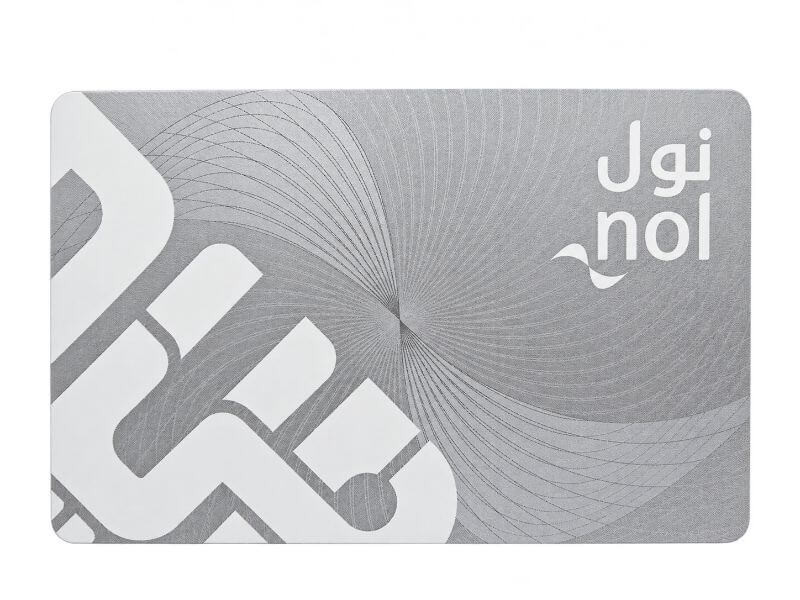
Gold Card. It costs the same as Silver, AED 25 with AED 19 credit. The difference is that Gold lets you sit in the Gold Class cabin on the Metro.
The fare is about double the Silver fare. A Silver card does not work in Gold Class, so you can only use that cabin with a Gold card.
Blue Card. This is a personalized card with your name and photo. It costs AED 70, with AED 20 credit, and you can recover your balance if you lose it. It is more for residents, so as a tourist you won’t need it.
Red Ticket. This is a paper ticket for occasional trips. It costs AED 2 and it can be loaded with up to 10 single trips. It is fine if you only plan to ride once or twice, but I would not use it for a whole holiday.
TIP: Get a Silver card. It is simple, cheap, and you can use it for your whole stay. If you travel with a partner or family, each person needs their own card.
Where to Buy a Nol Card
You can buy Silver, Gold, and Red cards at Metro stations. Use the vending machines or go to the ticket office. You can also buy them at authorized shops such as Zoom stores and Carrefour.
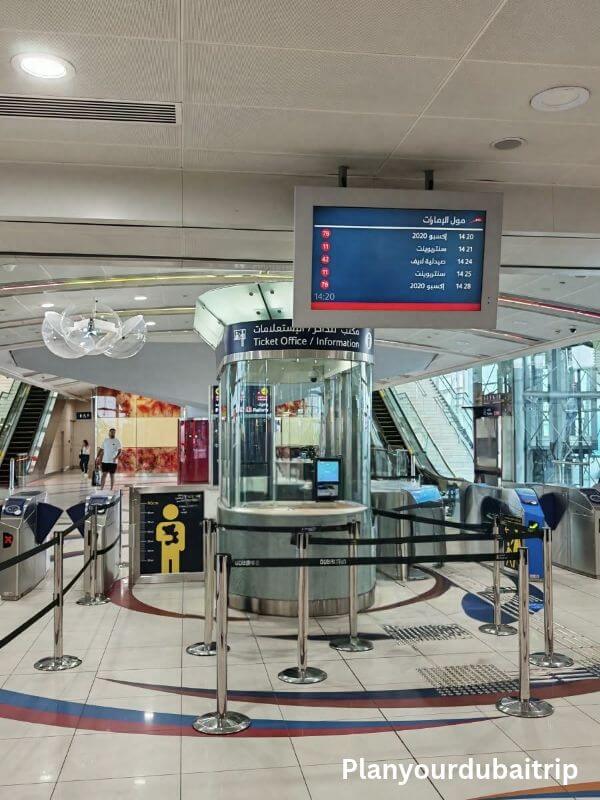
Pay by cash or card. For a Blue card you need to fill out a form.
How to Top Up Your Nol Card
There are a few ways to add money to your card. You can use the ticket machines in Metro stations, where the minimum top-up is AED 20.
You can also go to the ticket office, where the minimum is AED 50. Or you can top up online with the RTA website, the Nol Pay app, or the S’hail app.
Nol Card Minimum Balance
To start a trip, you need a minimum balance of AED 7.50 on your Nol card. If you have less, you may be stopped at the gate, so check your balance before you travel. For a Red ticket, you need at least one single trip loaded.
Tap In and Tap Out
Before you enter and exit any transport, tap your card on the validator. If you forget to tap, you can get a fine, so make it a habit from the first ride.
Ready to ride? Let’s start with the Metro.
Dubai Metro
The Dubai Metro is the easiest and fastest way to get around the city, and it’s the one I use the most. It is clean, air-conditioned, and fully driverless, so there is no driver at the front of the train.
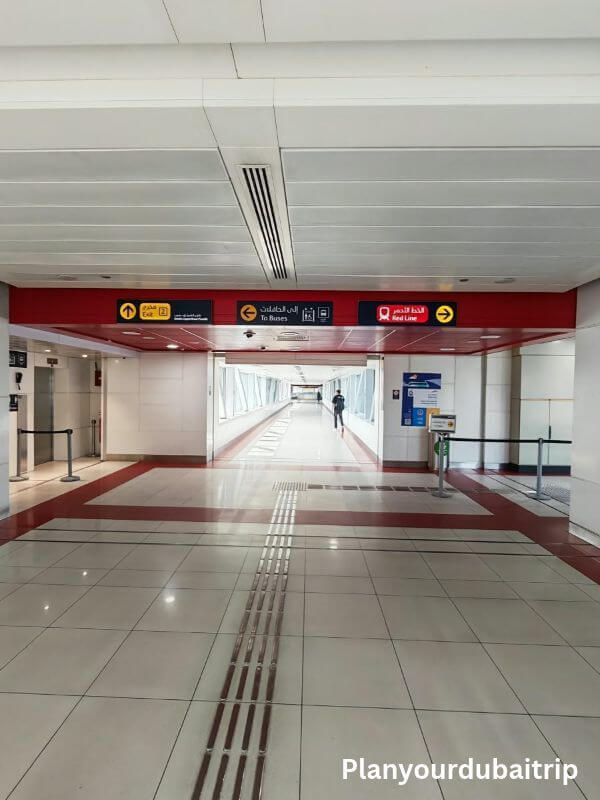
A fun fact: the Dubai Metro once held the Guinness World Record for the longest driverless metro network. The Riyadh Metro has since taken over the title.
Dubai Metro Lines
At the moment, there are two lines:
- Red Line: It runs from Centrepoint in the north to Expo City Dubai in the south. It passes through most of the places tourists visit, like Burj Khalifa/Dubai Mall, Mall of the Emirates, and the Dubai Marina area. Some trains go to Life Pharmacy instead of Expo City, so check the destination on the board before you get on.
- Green Line: It is shorter and goes from e& to Creek. It runs through Old Dubai, so it is the line you want for Al Fahidi, Gold Souq, and the Dubai Creek area.
You can change from one line to the other at Union or BurJuman station. Two other stations, Sobha Realty and DMCC, connect the Metro to the tram.
Dubai Metro Blue Line
A third line, the Blue Line, is being built and is planned to open in 2029.
It will connect nine communities, including Dubai International Airport, Mirdif, Dubai Silicon Oasis, Dubai Creek Harbour, and Dubai Festival City. It is not open yet, so don’t plan your trip around it.
Dubai Metro Opening Hours
The Metro does not run 24 hours. The stations are open at these times:
- Monday to Thursday and Saturday: 5:00 am to 12:00 am
- Friday: 5:00 am to 1:00 am
- Sunday: 8:00 am to 12:00 am
Times can change during public holidays and special events, so check before a late night out. If you are out late, plan to be at the station before closing time, or take a taxi.
Dubai Metro Fares
The fare depends on how many zones you travel through. You don’t need to know the zones. The gate counts them for you and takes the fare from your card when you tap out.
| Zones | Silver Card | Gold Card |
|---|---|---|
| 1 zone | AED 3 | AED 6 |
| 2 zones | AED 5 | AED 10 |
| More than 2 zones | AED 7.50 | AED 15 |
Children aged 5 and under travel free.
TIP: Even the longest trip on a Silver card costs only AED 7.50, which is a fraction of what a taxi would cost across the city.
Changing Between Metro, Tram, and Bus
If you travel from the Metro to a bus or the tram, tap out of the Metro and tap in to the next one within 30 minutes.
The RTA then counts both rides as one journey and charges you for the total number of zones, so you don’t pay twice. Don’t forget to tap at every step, or you can get a fine.
Dubai Metro Cabins
Each train has five cabins, and they are not all the same:
- Gold Class is at one end and is separated from the rest by a sliding door. You can only use it with a Gold card.
- Women and Children cabin is at the other end. Look for the bright pink signs and stickers. Men, please don’t sit there, as it can get you a fine.
- Silver Class is the middle part of the train and is for Silver card holders.
Dubai Metro Luggage Rules
If you travel with luggage, you can take two suitcases per person:
- Large suitcase: up to 81 x 58 x 30 cm
- Small suitcase: up to 55 x 38 x 20 cm
Leave your luggage in the designated area in the cabin.
Dubai Tram
The Dubai Tram runs between Dubai Marina and Al Sufouh, with stops at key hotspots such as Jumeirah Beach Residence (JBR) and Dubai Media City.
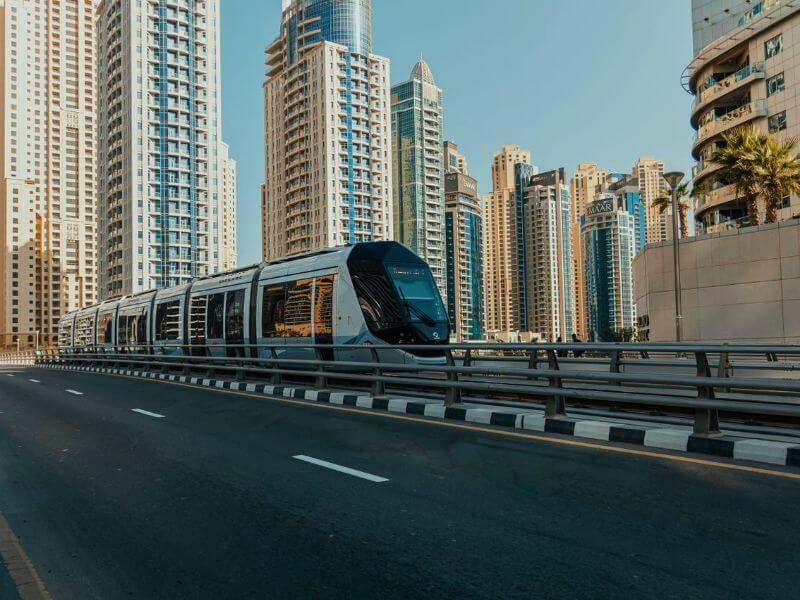
Photo credit: Kate Trysh, Pexels
It connects easily to the Dubai Metro and the Palm Monorail. It is short, but very useful if you stay in the Marina or JBR area. It is clean, air-conditioned, and easy to use.
Where the Dubai Tram Goes
The tram has 11 stations. It loops around Dubai Marina and JBR, then continues along Al Sufouh Road, passing Media City and Knowledge Village. Here are the stations:
- Jumeirah Beach Residence 1 (JBR 1)
- Jumeirah Beach Residence 2 (JBR 2)
- Jumeirah Lakes Towers (JLT)
- Dubai Marina Mall
- Dubai Marina
- Marina Towers
- Mina Seyahi
- Media City
- Palm Jumeirah
- Knowledge Village
- Al Sufouh
JBR 1 and JBR 2 are the ones I use to get to the beach and the walk along the coast. Dubai Marina and Marina Towers are good for the Marina area, and Mina Seyahi is near several beach hotels.
Connecting the Tram with the Metro and Monorail
You can switch between the tram and the Metro at two places.
At Dubai Marina tram station, you connect to Sobha Realty Metro station. At JLT tram station, you connect to DMCC Metro station. Both are on the Red Line.
The Palm Jumeirah tram station connects you to the Palm Monorail, which takes you to the Palm.
Dubai Tram Opening Hours
- Monday to Saturday: 6:00 am to 1:00 am (next day)
- Sunday: 9:00 am to 1:00 am (next day)
Times can change during public holidays and special events, so check the RTA website before you plan a late night.
Dubai Tram Fares
The tram runs within one zone only, so the fare is the same for every journey on the tram network, and you pay with your Nol card:
- Silver card: AED 3
- Gold card: AED 6
Children aged 5 and under travel free. Remember to tap in and tap out, as on the Metro.
If you change from the Metro to the tram within 30 minutes, the RTA counts both rides as one journey and charges you for the total number of zones.
Dubai Tram Cabins
Like the Metro, the tram has different classes:
- Gold Class: private cabins with wide leather seats and panoramic views, for Gold card holders only.
- Women and Children cabin: only for women and children. Men, please don’t sit there.
- Silver Class: the standard cabins for Silver card holders.
Dubai Tram Luggage Rules
The tram has the same luggage rules as the Metro. You can take two suitcases per person:
- Large suitcase: up to 81 x 58 x 30 cm
- Small suitcase: up to 55 x 38 x 20 cm
Keep your luggage in the dedicated area in the cabin.
Dubai Bus
The Dubai Bus is a low-cost way to explore the city, and it goes to the places the Metro and tram don’t reach. Dubai has more than 1,500 buses on 119 routes, covering most of the city.
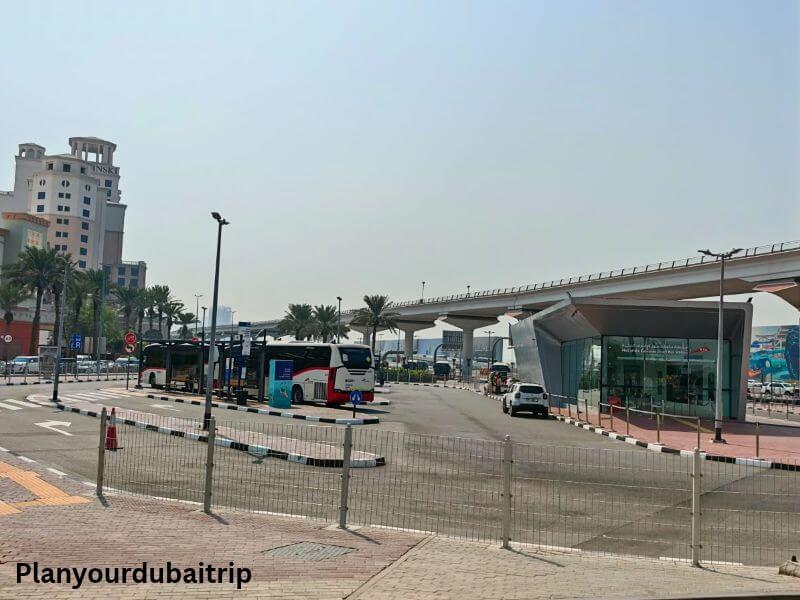
You may need a bit more time than on the Metro, since buses share the road with traffic, but it is an easy and cheap way to see more of Dubai.
Where the Dubai Bus Goes
The bus network covers almost every major neighborhood, so you can use it for places that are far from a Metro or tram station. There are two things I like most:
- Metro connections: 35 bus routes link directly to Metro stations, so you can take the Metro and finish the last part of your trip by bus.
- Airport access: You can catch a bus from all Dubai airport terminals.
TIP: Not sure which bus to take? Use the RTA Journey Planner. Enter where you are and where you want to go, and it shows you the bus number, the stops, and the timings.
Dubai Bus Opening Hours
Dubai Bus services run from 4:00 am to 1:00 am (next day). One route, C01, runs 24 hours. It goes from Airport Terminal 3 to Al Satwa Bus Station, which is useful if you land late at night.
Times can change on public holidays and special occasions, so check the RTA website before you plan a late trip.
Dubai Bus Fares
Bus fares are the same as on the Metro. You pay by the number of zones you pass through. The bus system is divided into seven zones, and the fare is taken from your Nol card when you tap out:
- Within one zone: AED 3
- Two zones: AED 5
- Three or more zones: AED 7.50
If you change between the bus and the Metro or tram within 30 minutes, the RTA counts both rides as one journey, so you don’t pay twice.
How to Pay for the Dubai Bus
Buses accept only the Nol card. You cannot pay with cash on the bus, so make sure your card has enough credit before you board.
Tap your card when you get on and when you get off, as on the Metro and tram. Nol top-up machines are available at the main bus stops, and you can also top up online.
Bus Facilities
All buses are air-conditioned, which you will be glad about in summer. Many bus stops have air-conditioned waiting areas too.
Some buses have a section for women and children, and there is priority seating and space for wheelchairs. Most bus stops show timings and route information.
Intercity and Hatta Buses
The bus network also connects Dubai to other emirates, with 12 intercity lines to places like Abu Dhabi, Sharjah, Ajman, Fujairah, and Al Ain.
You can also take a bus to Hatta, a mountain town and a popular day trip from Dubai. The Hatta Express starts from Dubai Mall Bus Station and costs AED 25 per trip.
Once you are in Hatta, a hop-on, hop-off bus takes you to the main sights.
Dubai Marine Transport
Dubai’s marine transport is a different way to get around the city, and a fun way to see it from the water. The RTA runs three types: the Abra, the Dubai Ferry, and the Dubai Water Taxi.
Abra
“Abra” comes from the Arabic word for “to cross”. It is the traditional boat that has carried people across Dubai Creek for centuries, and it is still one of the city’s most used modes of transport. There are two kinds:
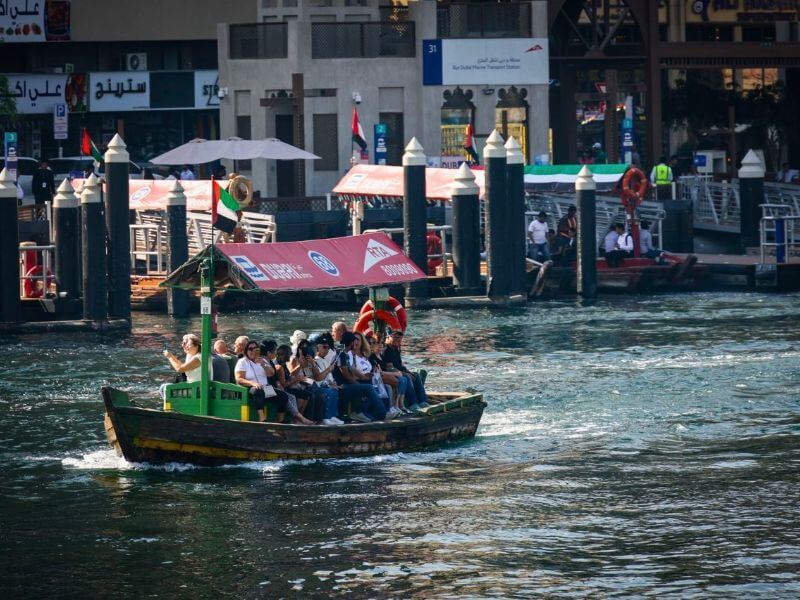
Photo credit: Magda Ehlers, Pexels
- Traditional Abra: This is the classic wooden boat that crosses the Creek between Bur Dubai and Deira Old Souq. It costs AED 1 per person per trip, paid in cash. It is one of the cheapest ways to get around Dubai.
- Modern Abra: These are newer boats, some of them air-conditioned, that run on more routes. They cost AED 2 per trip. Routes include Al Fahidi, Al Seef, Deira Old Souq, and Baniyas, and the boat from Al Jaddaf to Dubai Festival City. Some modern abras also run along the Dubai Water Canal, at AED 2 per stop.
There are also electric abras, which are more of a tourist cruise than a way to get around. They go to places like the Dubai Mall area and Global Village, and cost more.
TIP: Visiting Old Dubai? Take the abra from Bur Dubai to Deira Old Souq. For AED 1, you cross the Creek and arrive right at the souks.
Dubai Ferry
The Dubai Ferry is a comfortable, air-conditioned boat that shows you the coastline and the city’s sights from the sea. It has several routes, including one to Sharjah. For routes and fares, check the RTA Dubai Ferry page.
Dubai Water Taxi
The Dubai Water Taxi is an air-conditioned boat that runs in Dubai Marina. You can hop on and off at four stops: Marina Terrace, Marina Walk, Dubai Marina Mall, and Marina Promenade.
A single trip costs AED 7, so the full route costs up to AED 21, depending on how many stops you take. There is also a route from Dubai Marina Mall to Bluewaters Island for AED 7.
If you stay in the Marina, the water taxi is a nice way to get around the area and see it from the water.
Rules for Marine Transport
These rules apply to all marine transport:
- Children under 12 cannot travel on their own.
- Children under 12 who travel with an adult must wear a life jacket on board.
- You need a valid ID for the child, and you must show it at the ticket office at the marine station.
You can pay with a Nol card, debit or credit card, or cash, depending on the service. Bad weather or other issues can change routes and timings, and trips can be rerouted or cancelled for safety.
Timings also change during Ramadan and public holidays. For the latest routes, timings, and fares, check the RTA marine timetables.
Dubai Taxi
Dubai taxis are one of the most convenient ways to get around the city. They run 24 hours a day, 7 days a week, including public holidays.
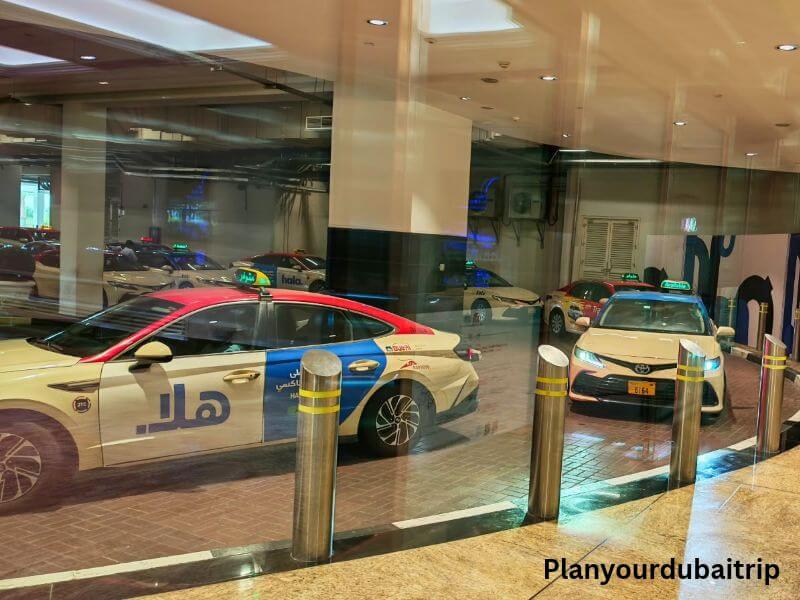
You can use a taxi for trips within Dubai and to other emirates, and they are all regulated by the RTA.
How to Recognize a Dubai Taxi
City taxis are cream-colored with a colored roof, such as red, orange, blue, or green. The different colors belong to different companies that run the taxis.
They are all under the RTA, and they all follow the same RTA rates, so the color does not change your fare. Pink taxis are only for women and children.
How to Get a Taxi
There are three ways to get a taxi:
- Street hail: Wave one down on the street. Taxis stop only in safe areas.
- Taxi ranks: You can find taxis at hotels, shopping malls, Metro stations, hospitals, and major landmarks. At Dubai International Airport, there are dedicated airport taxis.
- Apps: Book through Bolt, Careem, or the RTA’s S’hail app. The app shows you the arrival time of the taxi.
Dubai Taxi Fares
The fare is calculated by the meter, and it depends on how you book:
- Street hail: The starting fare is AED 5 from 6:00 am to 10:00 pm, and AED 5.50 from 10:00 pm to 6:00 am. The minimum fare is AED 12.
- Booked through an app: The starting fare is AED 9 to AED 13, depending on the time of day. The minimum fare is AED 13.
- Per kilometer: AED 2.45 in both cases.
Apps cost more in the busy hours, from 8:00 am to 10:00 am and from 4:00 pm to 8:00 pm, when the starting fare is AED 13. Fares can also go up at event locations and on New Year’s Eve.
A few extras can be added to your fare:
- Salik: If the taxi goes through a toll gate, you pay an extra charge.
- Sharjah: A trip through Sharjah has an extra charge of AED 20.
- Waiting time: 50 fils per minute.
How to Avoid Longer Routes
Here is something you should know as a tourist. Taxis use a meter, but it has happened to tourists that a driver took a longer route to get a higher fare.
If you don’t know the roads in Dubai, it is easy to be tricked. Here is how to protect yourself:
- Ask for the price first. If you get a taxi on the street, ask the driver for the price before you get in.
- Check the meter. Make sure it is on when the trip starts.
- Follow the route. Open Google Maps and watch the way the taxi is going.
- Use an app. When you book with Bolt, Careem, or S’hail, you see the route and the fare before the trip.
TIP: In the busy hours, an app taxi costs more, and the roads are slower. If your trip is along the Metro line, the Metro is often a faster and cheaper choice.
How to Pay for a Taxi
You can pay with cash, a credit or debit card (including Apple Pay and Samsung Pay), or your Nol card. If you book through an app, you can also pay with the app wallet.
Taxis are best for short trips, late evenings, and places the Metro, tram, and bus don’t reach.
Driverless Taxis
Driverless taxis are already on the road in Dubai. The RTA started commercial service in March 2026 in the Umm Suqeim and Jumeirah areas, and you can book them through the Apollo Go app or the Uber app.
The service is limited to those areas for now, so it is not an option for most trips yet.
Air Taxis Are Coming
Dubai is also planning to start an air taxi service in 2026, with the first vertiport (the landing station for air taxis) at Dubai International Airport.
More are planned in other parts of the city, like Palm Jumeirah, Downtown, and Dubai Marina. It is not open for passengers yet, so for now, you still need a regular taxi.
Getting from Dubai Airport to the City
Dubai International Airport (DXB) has three terminals, and there are a few easy ways to get to the city. Public transport is cheapest, but taxis and private transfers are easier if you arrive tired or have a lot of luggage.

Metro from the Airport
You can take the Metro from Terminal 1 and Terminal 3. Both have their own Red Line stations, called Airport Terminal 1 and Airport Terminal 3. This is the cheapest option, and it works well if you travel light.
Remember the Metro luggage rules (two suitcases per person, up to the sizes I listed in the Metro section). Terminal 2 does not have a Metro station, so if you land there, take a bus or a taxi.
You will need a Nol card, and you can buy one at the airport. If you are not sure how the Metro works, go back to the Dubai Metro section above.
Bus from the Airport
You can catch a bus from every terminal. The stops are right outside. Buses take only the Nol card, so you can’t pay with cash. If you arrive late at night, route C01 runs 24 hours from Terminal 3 to Al Satwa Bus Station.
Taxi from the Airport
The easiest way is to take a taxi. They are lined up outside every terminal, and you just follow the signs to the official taxi rank. Airport taxis run 24 hours a day, 7 days a week.
The meter starts at AED 25 when you leave the airport, and the rest of the fare depends on the distance. Pay by cash, card, or Nol card.
Remember my advice from the taxi section: ask for the price before you get in and check that the meter is on.
Private Transfer from the Airport
Another easy way is a private transfer that you book in advance. A driver waits for you at the airport, and the price is agreed when you book, so you don’t need to worry about the meter or the route.
This is a good choice if you arrive late at night, have a lot of luggage, or travel with children.
Dubai Public Transport Rules and Fines
Yes, you can get fined on public transport in Dubai. Fines range from AED 100 to AED 2,000, but most are easy to avoid if you know the rules. Here are the ones that matter most for tourists.
AED 100 Fines
These are the small things that people do without thinking:
- Eating or drinking where it is not allowed (this includes chewing gum)
- Sitting in a cabin or seat that is not for you, such as the Gold Class cabin without a Gold card, or men in the Women and Children cabin
- Putting your feet on the seat
- Causing a disturbance to other passengers or staff
- Bringing animals (except guide dogs)
- Trying to jump on the train when the doors are closing
- Carrying items that bother other passengers
AED 200 Fines
- Entering or exiting without tapping your Nol card
- Not showing your card when an inspector asks
- Using a card that is expired, invalid, or not yours
- Smoking
- Spitting, littering, or anything that makes the station or vehicle dirty
- Selling or promoting goods
- Not following the instructions of the inspectors
AED 300 to AED 500 Fines
- AED 300: Sleeping where it is not allowed
- AED 500: Carrying alcohol on the Metro, and using a counterfeit card
AED 1,000 to AED 2,000 Fines
- AED 1,000: Carrying dangerous items, such as weapons, sharp tools, or flammable materials
- AED 2,000: Damaging seats or equipment, misusing emergency buttons or exits, and using safety devices when there is no emergency
Other Ways to Get Around Dubai
Public transport covers most of what you need, but there are a few other options that can help, depending on your trip.
Rent a Car
If you want to explore at your own pace, for example for a day trip outside the city, you can rent a car. You will need your passport and a credit card for the security deposit.
For the driving license, it depends on your home country. If your country has an agreement with the UAE, you can drive with your home driving license. If it doesn’t, you need an International Driving Permit.
Bikes and Scooters
Dubai has bike paths and rental services in popular areas like Downtown Dubai and Dubai Marina. Careem BIKE, in partnership with the RTA, is the biggest bike-sharing service, and you can also use Nextbike, Byky, and Trek Bikes through their apps.
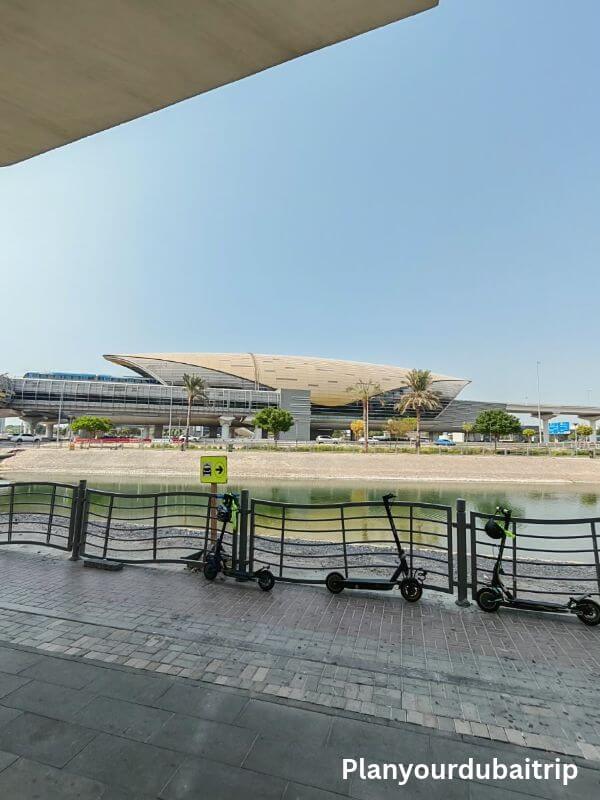
E-scooters are also available in places like Downtown, JLT, Dubai Marina, and Internet City. You rent them through an app from operators approved by the RTA: Dott, Lime, Skurrt, and Arnab.
In some areas, you can pay with your Nol card in the operator’s app. The RTA website says you need to obtain a permit to ride an e-scooter, but I haven’t used e-scooters yet, so check the RTA website for the details before you ride.
Uber
If you want a more luxurious ride than a city taxi, you can book a car with the Uber app. It is not an RTA city taxi, so it works differently, and you see the price in the app before you book.
Dubai Public Transport: FAQs
How do you pay for public transport in Dubai?
The easiest way is with a Nol card. It works on the Metro, tram, buses, and marine transport, and you can also use it in taxis.
A Silver card costs AED 25 and comes with AED 19 credit. You can buy one at Metro stations and at the airport. Remember to tap in and tap out every time.
Buses take only the Nol card, so you can’t pay with cash. Taxis also take cash and cards, and the traditional abra takes cash.
What is the cheapest way to travel around Dubai?
The cheapest ride is the traditional abra across Dubai Creek, which costs AED 1. For getting around the city, the Metro, tram, and bus are the cheapest options, with fares starting at AED 3 on a Silver card.
A taxi costs more, especially in the busy hours, so use public transport when you can.
Is the Dubai Metro open 24 hours?
No. Metro stations are open from 5:00 am to 12:00 am from Monday to Thursday and on Saturday, from 5:00 am to 1:00 am on Friday, and from 8:00 am to 12:00 am on Sunday.
After closing time, you can take a taxi or a bus. Dubai Bus runs until 1:00 am, and route C01 runs 24 hours from Airport Terminal 3 to Al Satwa Bus Station.
Do children pay for public transport in Dubai?
Children aged 5 and under travel free on the Metro, tram, and bus. On marine transport, children under 5 also travel free on regular ferry and water taxi trips. Sightseeing cruises have different rules, so check the fare before you book.
If you’re planning your Dubai trip, these articles might help: